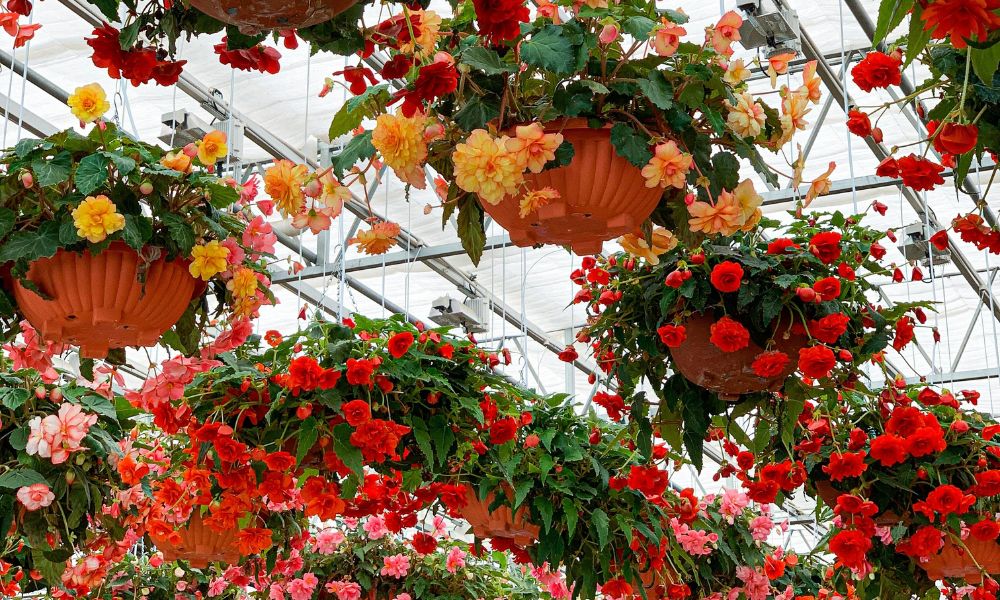
It was the time when I was thinking of adding a new member to my garden, and I was suggested by one of my friends to add the Chrysanthemums. He is a good gardener who also grows mums and gave me some information about them, that they are relatively low-maintenance and give a vibrant burst of color when most summer flowers start fading. In my experience, even a few pots of mums placed near the entrance or balcony can instantly refresh the whole garden space during the fall season. If you are also looking for something that can beautify your space or garden, Mums flower plant is the best option. Here I am sharing Mum’s complete information, their caring tips, and a gardening design by using these plants. Let’s learn the idea of growing and caring tips for this favourite fall colour bloomer.
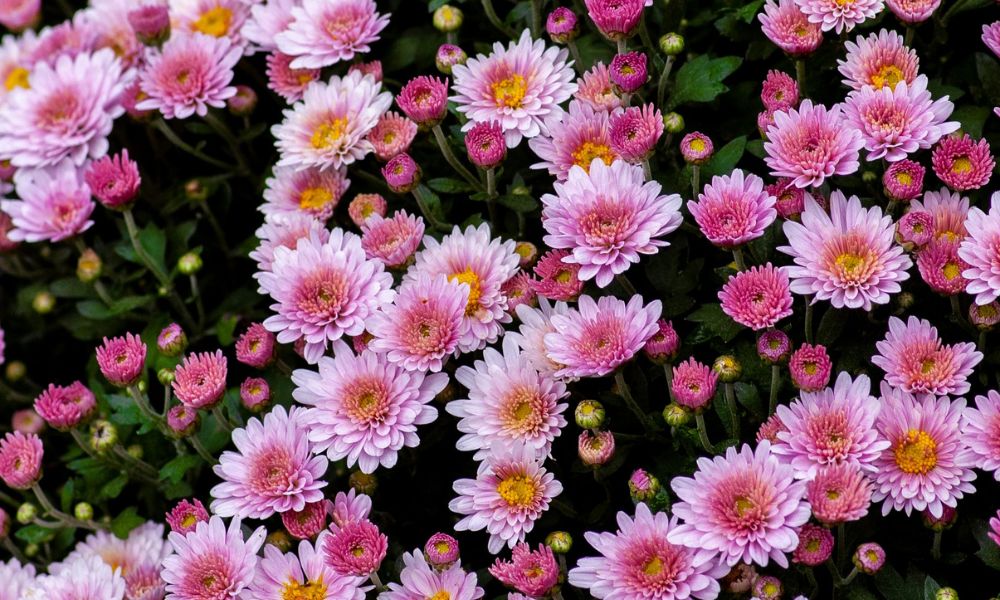
Chrysanthemums Facts And Information
Chrysanthemums (Mums) are some of the fall garden plants that are highly preferred in the gardens. They can be maintained relatively cheaply and grow properly under full sunlight, good soil of higher nutrient content, good drainage, and good ventilation. Coming in hundreds of varieties and in different colors, forms, and sizes, autumn. I got the information about the Mums that how they belong to culture in different locations. My friends told me that in various cultures, chrysanthemums are given different interpretations of life and revival in Asia, sympathy in Europe, honor and respect in the United States. It was really something new for me to add to the bucket of my knowledge.
- Growing Zones: Chrysanthemums can be planted in USDA 5-9, and some hardy specimens can be planted in zone 4.
- Note: The Plant Hardiness USDA Zone system was created by the United States Department of Agriculture (USDA) and was used specifically in the United States. It is determined with references to the average minimum winter temperature in the various regions of the U.S. each year. Although numerous gardeners all over the world refer to the USDA Zones as a rough guide, the system was never intended to be used in other countries other than the U.S. and local climatic conditions might not be ideal matches to the USDA classifications. USDA Zone guidelines are included where applicable; plant growth ultimately depends on your specific regional climate and environmental factors.
- Sun Exposure: Mums require 6-8 hours of full sun exposure daily to promote optimum flowering. When the buds start to get colored, potted mums may be placed in bright shade, the cooler temperatures causing the petals to age more slowly and increase the blooming period.
- Height & Spread: Mum varieties are between 1 and 3 feet tall and up to 1 to 2 feet wide depending on the variety.
- Flower Colors: The chrysanthemums grow in a very wide range of colors such as white, yellow, orange, lavender, purple, and red, and appeal to the eye in the bicolor ones.
- Bloom Time: The flowers bloom throughout the months of September to the frost. The chrysanthemums are short-day plants, i.e., their growth cycles are triggered by the reduction of days in end of summer and beginning of fall. Light-regulated green houses can also be used for flowering in a commercial environment.
Also Read: Vibrant Bloom Secrets for the Bougainvillea Plant
My Recommendation For Planting Chrysanthemums (Mums)
1. When to Plant Mums?
To ensure mums grow as perennial you should have them planted in early spring or at least six weeks before the first hard frost in the fall. This is because spring planting will provide the roots with enough time to root and greatly chances of overcoming winter. Fall color. To create fall color on plants, plant mums when they are already in blossom in the late summer or early fall.
2. Where to Plant?
Choose a sunny site that has good air circulation and soil that is well-drained. When it comes to mums, as per my experience, we must avoid planting them close to the outdoor lights because artificial lighting may affect the natural length of the day, and it may interfere with the growth of the flower. And in some cases flower completely die.
3. Soil Requirements
Chrysanthemums grow better in well-drained soil. These drains have the effect of avoiding root rot as well as promoting healthy buds. Generally, for the rule that where your soil is fit to raise vegetables, it will also suit mums. I also planted them in my veggie garden and the growth was unexpected.
4. Spacing Between Plants
The distance between the Mum plants must be 18-24 inches. It usually helps with air circulation between the plants. Perfect spacing reduces the chances of powder mildew and other fungal infections.
Also Read: What Shrubs With Roses Plant Perfect For Transforming Your Space?
Caring Tips for Mums Plant
1. Watering
Mums are shallow-rooted plants, which require watering on a regular basis, particularly when it is hot. Mulching in summer keeps the moisture available, evaporation is minimized and roots are kept cool.
2. Fertilizing
Chrysanthemums are neither heavy nor heavy feeders. Add half-strength balanced or bloom-boosting fertilizer (e.g., 5-10-5) after every two to three weeks in the spring until the buds are formed. Cessation of fertilizing at onset of bud coloration.
Note: The fertilizer name and price may vary as per your location.
3. Pinching & Pruning
Pinch two to three times around the ends of the new growth during the growing season to encourage the formation of new branches, and to make the plants fuller. Pinching of early bloomers (mid-September) should not be taken after mid-June. Late bloomers (October) can be clipped until mid- July. Pinching should be avoided in three months before the bloom time is expected.
4. Propagation
Mums can also be separated after every two or three years in spring when growing as perennials. Once the plant begins to grow, root up the plant, and take away the old center and put in new healthy outside shoots. It is also possible to subculture them using spring cuttings by cutting a leaf node below the root and planting it in sterile potting mix. Water new plants and keep them in a sunny location until they grow up.
5. Overwintering
- Zones 5-6: Retain fall standing energy in the stems. Following a heavy frost, 4-6 inches of straw or dry leaves mulch should be applied. Cut back in spring.
- Zones 7- 9: Once flowers are cut, cut down plants to approximately 6 inches and spread light mulch.
6. Diseases & Pests
Some of the issues are leaf spot, powdery mildew, and botrytis, particularly in shady or tight spaces. Water leaves early in the morning to ensure that they are dry. The aphids, spider mites, leafminers, and caterpillars can be suppressed by a heavy spray of water or organic remedies like neem oil or insecticidal soap. I used the neem oil as it is a natural remedy to get rid of these issues.
7. Container Care
Select drainage holes in pots at least 12 inches wide and a high quality, well-draining potting mix. Water the entirety every time the first inch of soil is dry since containers become drier in hot weather. Transplant flowering plants into the shady spots to prolong the flower life. When it gets colder outside, overwinter potted mums in a non heated garage/shed, and watered lightly to ensure that the soil does not dry up.
Also Read: Garden House: The Perfect Combination of Nature, Comfort, and Modern Living
Also Read: Garden Care From Animals in Villages – My Personal Story
Possibilities When MUMS Plant Fails or Dies
Although mums are hassle-free, numerous gardeners fall into the same traps. I also faced such an issue when I was planting them. I lost around 2-3 plants, and when it happened, it really broke you. This is the list of mums failure top, and how to correct it. It will help you to get rid of planting failure and grow the Mums in the right way.
- Planted late: Roots will not have time to grow before a freeze; spring plant, or at least 6 weeks before the first frost.
- Poor drainage: Elevate the bed or put containers with drains.
- No pinching: Leggy plants flop; follow the pinch tips through early summer to stronger growth.
- Dry pots: Mums dry their roots, so there shouldn’t be much water in them; they need to be watered every day, especially on hot days; mulch mums with 1 to 2 inches of mulch.
Personally Recommended MUM Design Ideas
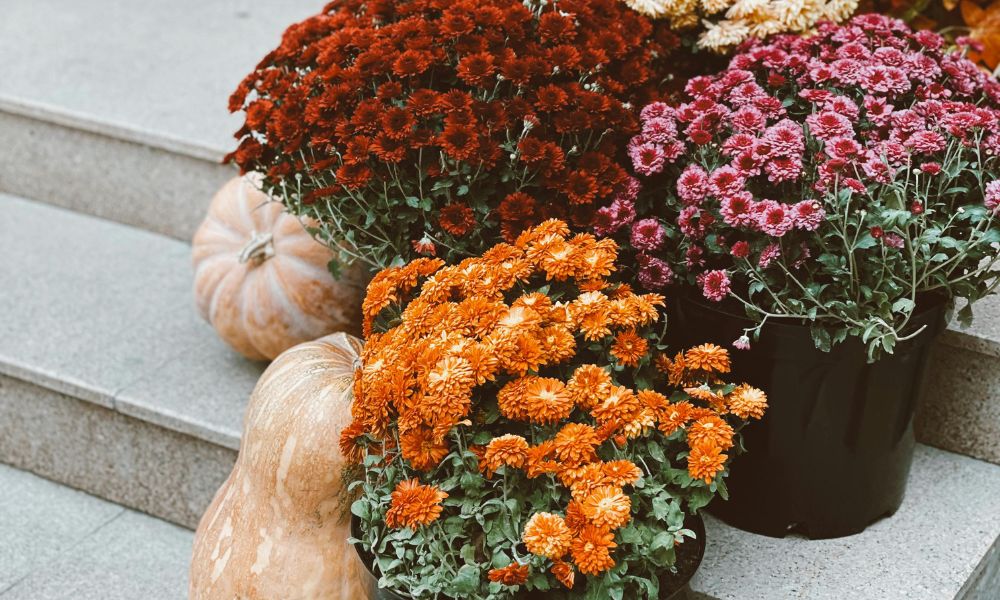
Chrysanthemums can either be planted in the garden or in pots. Here are some of the ideas that I personally used and recommend for planting the Mums.
- Good for containers and baskets, as they have a shallow-rooting habit.
- Grow as an annual in the fall to fill and substitute the annuals in summer.
- Consider thriller (ornamental grass), filler (mum), spiller (trailing ivy/ lysimachia) to plant in a container.
- The numerous color option gives mums the option of having either color accents that coordinate or complement each other both out and in.
- Paint the cozy corners with similar color a door or cushions and some mums too.
- These are quite cheap and hence, can be a very ideal option in bulk groupings or where there is repetition across a territory.
- Plant with other fall flower varieties such as coneflower, sedum, aster, bluebeard and pansies.
- According to Penn State Extension, one or two colors can be used to make the most of the effect as far as possible. Or, have a gradual change of similar colors. In case you have to put up the decoration with pumpkins and gourds, then make sure to use orange, yellow and creamy white mums. With a yard containing much green foliage, one should experiment with bright pinks, lavenders, whites, or reds.
Frequently Asked Questions
Are mums annuals or perennials?
Majority of mums are usually planted as fall annuals though with proper care some varieties show their worth as perennial over a number of years in specific areas. Colder climates In colder weather it is better to leave the top growth of the plant uncut through winter, and shrink it in with a loose mat of mulch, of straw or evergreen tweezes. In spring, when new growth has started, then pruning must be performed. In regions where winter is not so harsh, after they have gone through flowering, the mums may be trimmed to a height of approximately 6 inches. Going to your local garden center and inquiring about the varieties of best varieties to your climate is always a better choice.
Should I deadhead mums?
The spent flower clusters should be trimmed off frequently to ensure that the plant does not appear untidy, and also to aid in redirecting the energy of the plant to give rise to new healthy buds.
Are mums poisonous to cats, dogs or other animals?
Mums do contain substances that can be toxic to cats, dogs, and horses if ingested, so ensure to keep this in mind while choosing a location that might be explored by curious pets.
Are mums deer and rabbit resistant?
Deer and rabbits usually stay away from plants with strong scents and fuzzy leaves both traits mums have so they’re generally considered fairly resistant to these animals.